Cart
0

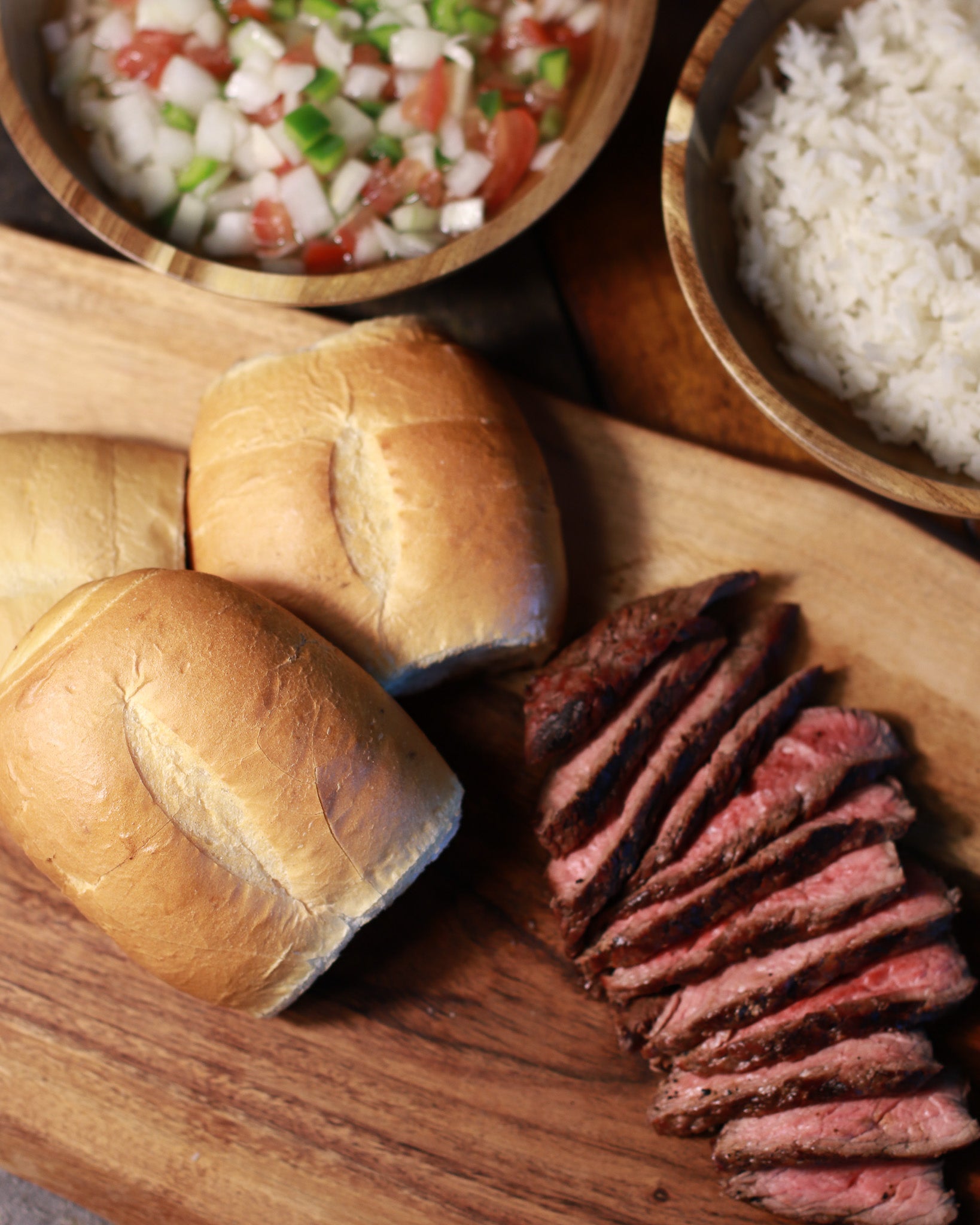
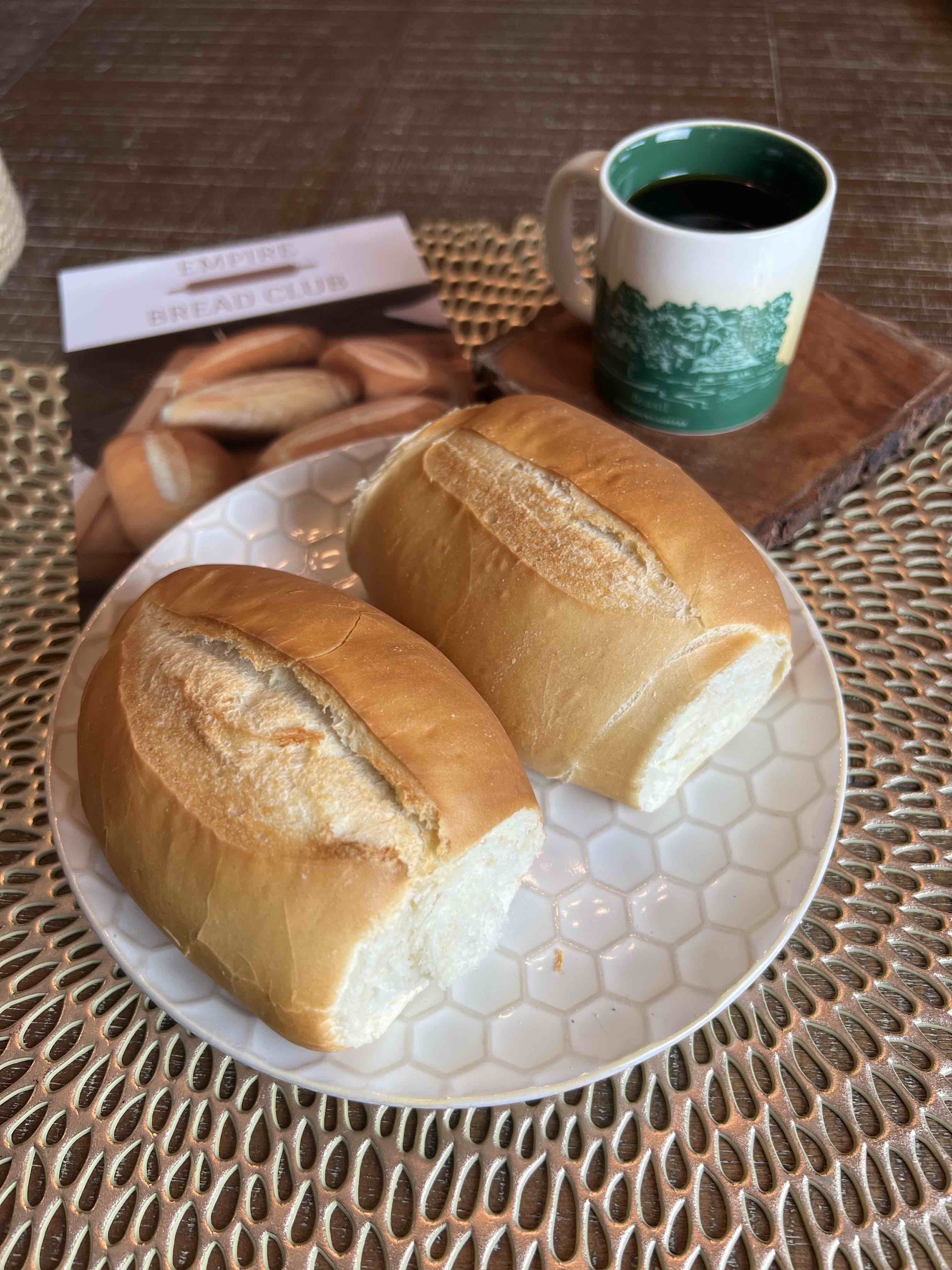
Meet pão francês! It's the funny, football-shaped bread found piled up fresh at every market, cafe, and bakery across Brazil. The crust is thin and crackly, and leaves a mess of crumbs on your plate! Inside it's light and fluffy. In Brazil, it's a daily staple yet it's hard to find here in the United States. The crunchy crust and soft crumb are also unique compared to many popular breads found here.
Despite the name, it isn't French. Brazilian bakers invented it in the early 1900s based on descriptions of a baguette from Brazilians who had spent time in Paris. Over time, it grew in popularity and is now the country's most famous bread. Depending on where you are, Brazilians also call it pão de sal, pãozinho, or cacetinho.
We thought it would be fun to share the original recipe we started with in our own kitchen. It's a great place to begin if you're curious about Brazilian cooking, and we think it makes genuinely good bread!
Here at Empire Bread Club, we have refined things over time so that our pão francês comes out of your oven at home just like fresh bread at a Brazilian bakery or 'padaria'. That means our bread has to survive a shipping box and freezer, and still come out of your oven tasting delicious.
The Recipe
Makes about 16 rolls
Ingredients
- 700 g bread flour (King Arthur is an excellent choice)
- 420 g water, with about 25% of it ice to keep the dough temperature cool
- 10 g instant yeast
- 14 g salt
- 14 g sugar
- 7 g salted butter (margarine is common in Brazil, but we prefer butter's flavor)
Steps
- Mix — In a kitchen mixer or large bowl, add the flour, yeast, sugar, and salt together and mix for about 30 seconds to evenly disperse the dry ingredients. We recommend starting with a kneading hook on your mixer. Add the water + ice slowly, and mix on the second setting until the dough is no longer shaggy. Add the butter.
- Knead — Mix with a kneading hook and faster speed (3 or 4) or by hand until the dough is smooth and elastic. Use the windowpane test as a good way to know when your dough is ready.
- First rise — Many recipes recommend a first rise of 20 minutes or longer. For pão francês, we never found this step was valuable, but letting the dough rest 5-10 mins covered helps the gluten relax.
- Shape — Divide into roughly 16 pieces. Use a rolling pin to flatten each into a long rectangle, roll the dough back on itself tight into a short cylinder, and pinch the seam closed. Set them seam side down on a perforated non-stick baking tray.
-
Second rise — Cover loosely and give them 60 to 90 minutes. They will be proofed enough when you can poke the dough gently with your finger and it springs back in a second or two.
Keep an eye on the surface of the dough so it doesn't dry out. Putting a small pot of boiling water in your oven (turned off) with the rolls as they proof can help with humidity. - Score — Take a very sharp blade or lame and make one clean cut down the length of each roll.
-
Bake with steam — Preheat to 450°F with a metal pan on the bottom rack. Load the rolls, pour a cup of boiling water into the hot pan, and bake 2 to 3 minutes at 450°F. Drop the oven to 400°F and bake 15 to 18 minutes more until golden. Pull the water pan for the last few minutes so the crust can firm up.
This is the hardest part for pão francês. Bakeries in Brazil use commercial steam injection ovens that help create the crispy, crackly crust that makes it famous. No matter how good your home oven is, it's hard to replicate this well. - Enjoy your hard work! — Pão francês is a lean dough, meaning it will go stale within a few hours of baking. That's why padarias bake it fresh several times a day. You can freeze your leftover rolls and reheat them later, but they will dry out a little. This is another challenge that's hard to get right baking at home.
Three Padaria Secrets You Can't Copy
If your rolls come out good but not quite like in Brazil, it's because there are a few things that are hard to do at home.
Steam in Your Oven — We already mentioned steam ovens. A home oven can't inject steam on demand, which is why every recipe (ours included) improvises with water pans and ice cubes. It helps, but a full-powered commercial steam oven with a convection fan takes things to another level. It's a key step that's hard to copy.
Melhoradores — Brazilian bakeries use melhoradores, or bread improvers you can't buy at a grocery store. Those blends help the dough rise taller and bake up airier. It's a big part of why the bakery's rolls feel lighter than even a really good homemade batch. Some improvers also include ingredients that aren't great for you. We use a custom blend of enzymes, the same kind of proteins already found in flour and yeast.
Baked Fresh Throughout the Day — You certainly can bake this recipe fresh all day long! But it takes a few hours and that would be a lot of work. Unfortunately in the US and outside of major cities, it's unlikely we'll see supermarkets baking pão francês daily anytime soon. We mentioned you can freeze pão francês, but it does tend to dry out. We tested over 100 different recipes to find the right balance for a bread that can survive shipping, stay frozen, and still come out of the oven like a bakery in Brazil.
How to Make Better Pão Francês at Home
If you are still determined to make the best pão francês you can, here are a few additional suggestions from our experience:
- Use a pinch (0.1g) of acerola cherry powder. The vitamin C in it acts as an improver, plus you get the polyphenols and antioxidants.
- Try a dutch oven for the steam. This is common in sourdough baking, and can improve your oven spring.
- When you shape the rolls, make sure you roll them tightly. This will help give the roll its shape and helps it spring up instead of spreading out.
- Experiment with the temperature. Starting hotter can help with oven spring. A lower temperature can help the dough bake more evenly throughout the crumb.
Common Questions
Is pão francês actually French?
No. Brazilian bakers created it in the early 1900s, and the name is the only French thing about it.
What's the difference between pão francês and a baguette?
Size and crumb, mostly. Pão francês is a small roll, softer and fluffier inside, with a thinner crust. A baguette is long, chewier, and has a much more open crumb.
Can you freeze pão francês?
Yes, but a home-baked roll dries out in the freezer because it's a lean dough. That's the problem we spent 100+ test recipes solving.
Why does my crust not crackle?
Steam. Bakeries inject it on demand; a water pan gets you partway there but not all the way.
What do Brazilians eat with it?
Butter, requeijão (a spreadable cream cheese from a jar), or pressed into a misto quente, the hot ham-and-cheese sandwich. Usually with coffee.
Pão Francês Delivered Fresh to Your Door
These challenges with baking at home are why we started Empire Bread Club. We lived in Brazil and loved picking up fresh pão francês daily from our local bakery. Eventually we learned to bake it ourselves here in the US, and then spent way too long figuring out how to get it to your house tasting right.
Here's what we landed on. We bake our pão francês and ship it to your door fresh, with a recipe designed to stay good in transit. It arrives at your house thawed, and you freeze when it arrives for storage. After that, you are 7 minutes away from warm, fresh pão francês in your own kitchen any time of day! No need to wait for the local bakery to have fresh bread ready to sell.
Eat it the way Brazil does. Split one warm with butter or requeijão, press it into a misto quente (the hot ham-and-cheese sandwich), or have one with your afternoon coffee.